Introduction to Core PHP in Modern Web Development
In today’s digital era, businesses rely heavily on websites, web portals, and custom web applications to manage operations, connect with customers, and expand their online presence. Behind every dynamic website, there is a powerful backend technology handling data, security, and business logic. One of the most trusted backend technologies in web development is Core PHP.
Before learning advanced frameworks, understanding Core PHP is extremely important because it builds the foundation of backend programming. It helps developers understand how server-side applications work, how databases communicate with websites, and how dynamic content is generated.
Whether you are a student, beginner developer, freelancer, or someone planning a career in software development, learning Core PHP can be your first step toward becoming a professional backend developer.
What is Core PHP and Why is It Important?
Core PHP refers to the basic and original version of PHP without using frameworks. It allows developers to write custom backend logic from scratch and fully control application behavior.
PHP was created by Rasmus Lerdorf and today powers millions of websites worldwide.
Core PHP is important because it teaches developers the real fundamentals of backend development.
With Core PHP, developers can:
- Build dynamic websites
- Process forms and user data
- Connect with databases
- Manage sessions and cookies
- Create authentication systems
- Build custom business applications
- Handle file uploads and server operations
Learning Core PHP gives developers complete programming control and deeper technical understanding.
Why is Core PHP Still Relevant in 2026?
Even though modern frameworks are popular, Core PHP remains highly relevant because it forms the backbone of PHP development.
Many professional developers begin with Core PHP because it helps them understand:
- How server-side scripting works
- How HTTP requests are processed
- How database queries are executed
- How application logic is structured
- How security is implemented manually
Core PHP is still used in:
- Custom websites
- Business portals
- CRM systems
- ERP solutions
- Legacy application maintenance
- API development
Its flexibility and compatibility make it valuable even today.
Core Features of Core PHP
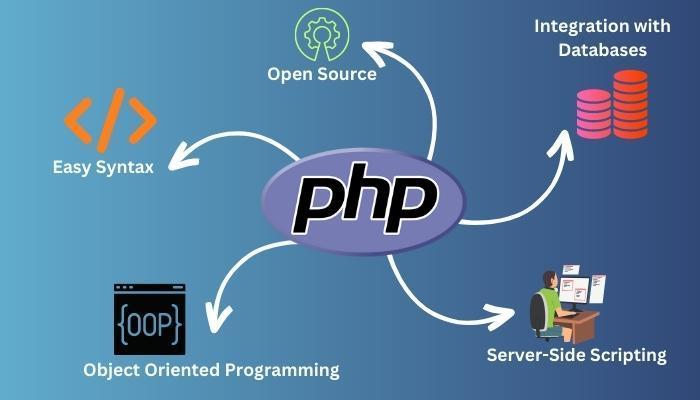
Core PHP provides powerful features that make backend development easier, faster, and more flexible. It helps developers build dynamic websites, manage data, and create custom business applications efficiently.
Server-Side Programming
Core PHP processes user requests on the server and generates dynamic web content in real time. It handles login systems, form submissions, search functionality, and other backend operations smoothly.
Database Connectivity
PHP integrates easily with databases like MySQL. Developers can store, retrieve, update, and manage application data efficiently for websites and business applications.
Form Handling
Core PHP allows developers to collect, validate, and process user information securely through registration forms, login forms, contact forms, and inquiry forms.
Session and Cookie Management
PHP provides built-in session and cookie management for user authentication, activity tracking, shopping carts, and personalized user experiences.
File Handling
Applications built with PHP can upload, store, read, and manage files such as images, documents, reports, videos, and other important business files.
Email Integration
PHP supports email functionality for sending account verification emails, password recovery links, order confirmations, and automated customer notifications.
Custom Application Development
Core PHP gives developers complete flexibility to build custom solutions such as CRM systems, ERP software, e-commerce websites, school portals, and business management applications.
Security Features in Core PHP
Security plays an important role in web applications.
Important security practices include:
- Input validation
- Password encryption
- Session security
- SQL query protection
- Form validation
- Access control
These practices help protect applications from common cyber threats
Core PHP vs Laravel Comparison
| Feature | Core PHP | Laravel |
|---|---|---|
| Speed | Manual coding | Faster with built-in tools |
| Learning | Best for fundamentals | Easy after PHP basics |
| Structure | Flexible but manual | MVC based structure |
| Security | Manual implementation | Built-in security |
| Database | Manual SQL queries | Eloquent ORM |
| Code | More repetitive | Cleaner & reusable |
| Scalability | Small to medium projects | Large applications |
| API | Manual development | Built-in API support |
| Best For | Learning & custom projects | Professional applications |
| Feature | Core PHP | Laravel |
Final Thoughts on Learning Core PHP
Core PHP continues to be one of the most valuable technologies for learning backend development from the ground level. It helps developers understand how web applications work behind the scenes, how server-side logic is written, how databases are managed, and how secure, dynamic applications are built.
By learning Core PHP, you build a strong foundation in programming concepts, database connectivity, form handling, session management, security implementation, and custom application development. These skills are essential for becoming a confident and professional backend developer.
Whether your goal is to get a job in software development, work as a freelancer, build custom business applications, or move toward advanced frameworks like Laravel, starting with Core PHP is one of the smartest career decisions you can make.